

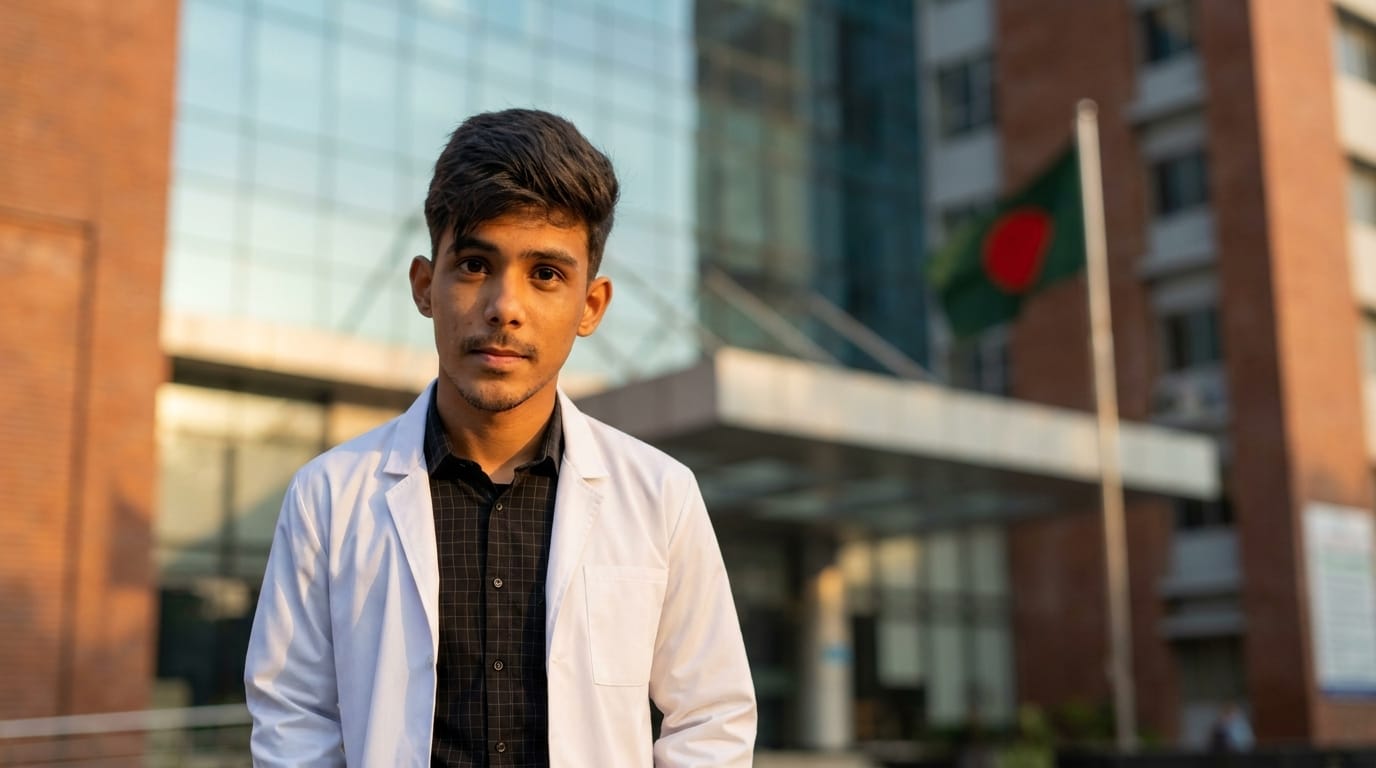
When I was sitting with my NEET UG scorecard and realising that a government seat was not happening, and that private MBBS in India was going to cost my family somewhere between 80 lakh and one crore rupees, I had to make a decision quickly. My options were Russia, China, Georgia, Philippines, Kyrgyzstan, and Bangladesh. I spent two weeks researching all of them properly, talking to seniors who had already gone, and comparing official data rather than agent brochures.
I chose Bangladesh. I am now in my final year at Marks Medical College in Dhaka, and I have never once questioned that decision. This article is the honest, complete version of why, written for every family that is going through the same research process right now.
I want to be clear before we go further. My friend Samad made a YouTube video on this same topic, which I have embedded below. Watch it first if you want the ground-level student perspective in his own words. Then read this article for the complete picture with data, comparisons, and the honest answers to the questions that actually matter.
In this article: Why Bangladesh beats Russia, China and most other countries for Indian students. The FMGE pass rate data from official NBEMS sources. What safety, culture, food and language are actually like on the ground. The honest cons that nobody talks about. And exactly how to check if you qualify before you make any commitment.
The Problem Most Indian Students Face After NEET
Every year, more than 24 lakh students appear for NEET in India. There are roughly 1.1 lakh government MBBS seats.Not everyone gets a government seat. If you are one of the 22 lakh students who did not make it to a government seat, and if your family cannot afford 80 lakh to one crore rupees minimum for a private MBBS in India, you are genuinely stuck unless you look beyond India’s borders to do MBBS Abroad.
The question is not whether to study abroad. For many families, the question is which country makes the most sense when you are an Indian student with an Indian educational background, planning to come back to India and practice medicine here. That single requirement, coming back to practice in India, changes the entire analysis completely.
The One Number That You Should Consider is FMGE Pass Rate
Before I explain my personal reasons for choosing Bangladesh, I want to provide this information in data, because data does not lie and agents and consultants lie about this for their commission.
The FMGE, the Foreign Medical Graduate Examination conducted by NBEMS India, is the licensing exam every Indian student who graduates from a foreign medical college must clear before practicing in India. Without clearing this exam, the degree you spent five years and thirty to forty lakh rupees earning cannot be used in India and neither you can register to the medical council. This single fact makes the FMGE pass rate the most important metric for evaluating any foreign MBBS destination.
| Country | FMGE 2025 Pass Rate | Students Appeared | Notes |
|---|---|---|---|
| 🇬🇪 Georgia | 35.65% | 4,221 | Highest among major destinations |
| 🇧🇩 Bangladesh ⭐ | 34.45% | 2,822 | 2nd highest. Small well-prepared cohort. |
| 🇳🇵 Nepal | 30.13% | 1,809 | Good, but very few seats for Indians |
| 🇷🇺 Russia | 29.54% | 11,276 | Huge variation. Top colleges only. |
| 🇵🇭 Philippines | ~24.00% | ~4,800 | Far from India. US curriculum mismatch. |
| 🇨🇳 China | 19.22% | 13,427 | Worst major destination for FMGE |
Source: Official NBEMS Annual FMGE Statistics 2025. natboard.edu.in
Bangladesh has a 34.45% FMGE pass rate from only 2,822 students appearing. 11,276 students gave exam after completing MBBS from Russia and achieve a lower pass rate. China sends 13,427 students and only 19.22% pass. The reason Bangladesh’s rate is so strong despite the smaller number of people is exactly what I experienced personally. The curriculum is aligned with the same books India uses. The diseases are tropical, identical to what FMGE tests as its geographically same area with almost same development and infrastructure. The daily exam system forces you to study consistently rather than cramming one night before exams. This is not a coincidence. It is a direct result of what the academic environment actually demands of you every day.We are going to be doctors so we need this type of exposure.
Reason 1: The Same Textbooks as India, Literally
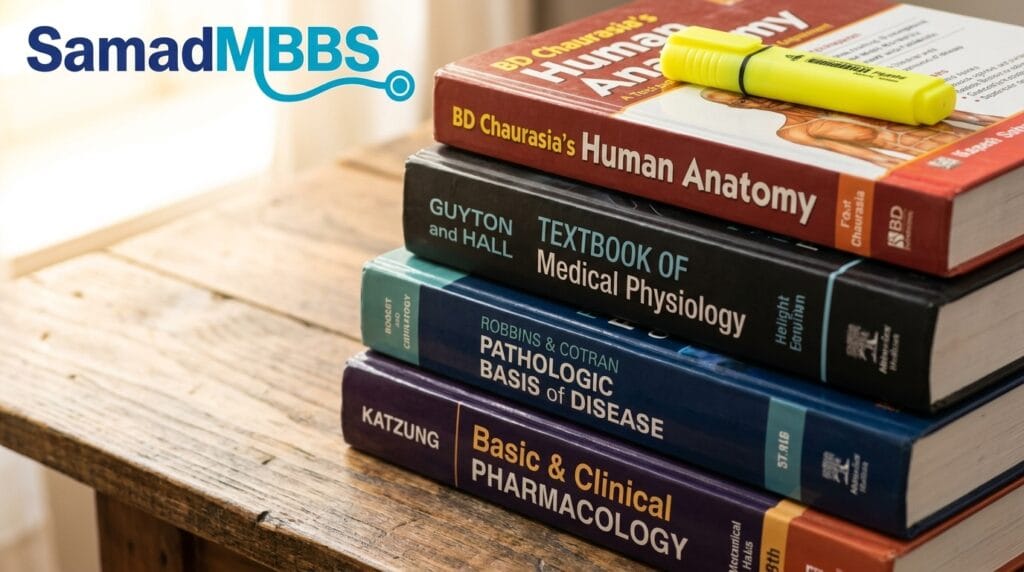
This is the single most important academic reason and I will explain it simply. The FMGE was designed around the books Indian medical students use. BD Chaurasia for Anatomy. Guyton and Hall for Physiology. Robbins for Pathology. KD Tripathi for Pharmacology. Bailey and Love for Surgery. Davidson’s and Harrison’s for Medicine.
When I came to Marks Medical College in Bangladesh, these were the same books sitting on the shelf on day one. Not translated versions. Not adapted editions. The exact same books in English, with the exact same chapters, the exact same MCQs used in India’s entrance and licensing exams.
Compare this to Russia, where the medium of instruction is supposedly English but the clinical exposure happens in Russian, with Russian textbooks and Russian disease patterns. Compare this to China, where everything clinical happens in Mandarin. Students from those countries have to rebuild their entire framework when they sit FMGE. Students from Bangladesh are already studying from the framework the FMGE was built around.
Reason 2 : The Diseases Here Are the Same as Back Home
Bangladesh is a tropical South Asian country. The diseases patients present with at Marks Medical College’s hospital are dengue, malaria, tuberculosis, typhoid, tropical obstetric complications, snake bites, gastrointestinal infections, and chest infections from air pollution. These are exactly the same conditions that appear most heavily in the FMGE clinical question bank, because that exam was built for doctors who are going to practice in India, where the same diseases are present.
A student who trained in Russia treats frostbite and cardiovascular disease patterns from cold climatesa and most colleges and universities there doesn’t allow you to touch the patient, it’s technically observership. A student from China treats diseases dominant in East Asian populations. When they sit FMGE and encounter tropical disease MCQs, they are working from theory alone. When I sit FMGE after completing MBBS from Bangladesh, I have attended these types of patients with my own hands in hospital wards during clinical rotations so its relatable. The difference in confidence and recall is enormous.
Reason 3: The Distance from Home
Samad mentioned this in his video and it is worth explaining in full because the practical impact over five years is significant. The Petrapole border crossing between West Bengal and Benapole in Bangladesh is 5km from the border town of Bangaon. From Kolkata’s Sealdah station, you take a local train to Bangaon for twenty rupees, a shared auto to the border for fifty rupees, cross immigration, and take a bus to Dhaka. The entire journey costs under 1500 rupees. A direct flight from Dhaka to Kolkata is around three thousand to seven thousand rupees depending on when you book.I have written a dedicated article about this with step by step instructions on how to travel from India to Bangladesh.
Compare this to Russia, where a flight home costs twenty thousand to forty thousand rupees and takes eight to twelve hours with a layover. Or China, where students were stranded for two to three years during COVID with no way home and no way to attend college. Or the Philippines, which is a ten-hour flight from anywhere in India.
Over five years, this difference in travel cost and travel time adds up to a meaningful amount of money and a meaningful amount of time spent at home during festivals, emergencies, and breaks. Samad goes home for Eid vacations every year. It costs him roughly twelve thousand rupees return. That accessibility is something that genuinely matters to your mental health and your family’s peace of mind across a five years of MBBS. Parents can also visit you here very easily and you can visit home too within hours,and you have multiple transport options like bus, train, flights etc.
Travel cost comparison across five years: Bangladesh return trip approximately ₹5,000 to ₹7,000. Russia return trip approximately ₹25,000 to ₹45,000. China return trip approximately ₹20,000 to ₹40,000 when flights are available. Philippines return trip approximately ₹18,000 to ₹35,000. Over five years of two trips home per year, Bangladesh saves a family between ₹2 lakh and ₹4 lakh in travel costs alone compared to other destinations.
Reason 4: The Fees Are Official and Verified
The total cost of MBBS in Bangladesh ranges from approximately 32 lakh rupees to 52 lakh rupees across the five-year MBBS, depending on which college you choose. These numbers come directly from official offer letters and fee circulars issued by the colleges themselves, which is something we verify and publish on SamadMBBS.com for every single college we cover.
The important thing to understand is that there is no donation system in Bangladesh. When a college says the fee is 35,000 US dollars, that is the fee. There is no separate capitation fee. There is no seat donation. There is no under-the-table amount that the agent collects on top. The money goes from your family’s bank account in India directly to the college’s official bank account in Bangladesh via international wire transfer. We publish the SWIFT code and account number for every college we work with so families can verify this directly.
| Country | Approx. Total Fees (5 Yrs) | Honest Note |
|---|---|---|
| 🇧🇩 Bangladesh | ₹32 to ₹52 Lakhs | Official circulars published. No donation. Verified. |
| 🇷🇺 Russia | ₹22 to ₹35 Lakhs | Cheaper on paper but lower FMGE and high travel costs. |
| 🇬🇪 Georgia | ₹35 to ₹55 Lakhs | More expensive. Best FMGE rate but no tropical exposure. |
| 🇵🇭 Philippines | ₹28 to ₹40 Lakhs | Similar cost but 10-hour flight and US curriculum mismatch. |
| 🇨🇳 China | ₹15 to ₹28 Lakhs | Cheapest fees. Worst FMGE rate. COVID isolation risk. |
| 🇮🇳 India (Private) | ₹80L to ₹1.5 Crore | No FMGE required. But financially impossible for most families. |
Reason 5: The Culture Feels Familiar
I want to explain this honestly rather than romantically, because there is a difference between saying “the culture is similar” and what that actually means in daily life.
Bangladesh shares a long cultural and linguistic history with eastern India, particularly West Bengal. The food, the music, the way people greet each other, the festivals, the general pace of life in a South Asian city, these are all immediately recognisable to any Indian student. When I arrived in Dhaka for the first time, the anxiety I was expecting to feel about being in a foreign country simply did not arrive. It felt more familiar than I had anticipated.
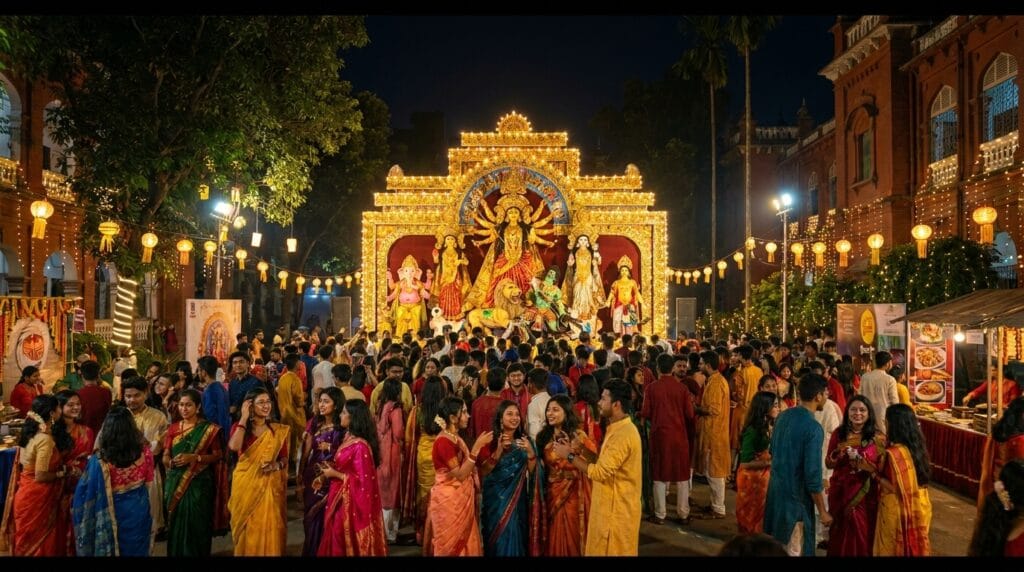
Durga Puja is celebrated here. You can find temples and gurudwaras in Dhaka. The rickshaws, the cha, the street food stalls selling shingara and puri, the call to prayer, the chaotic beauty of City market. None of this is unfamiliar to an Indian student. Compare this to arriving in a Russian city in February at minus twenty degrees Celsius with no familiar food, no familiar faces, and everything written in Cyrillic. The adjustment is not comparable.
Samad makes a point in his video about this too. The local people in Dhaka are genuinely helpful to Indian students. There is no discrimination. Seniors from your own college are often nearby and available, especially the Indian seniors who share the same hostel with you. The whole environment is set up to help you settle in quickly rather than feel isolated.
Reason 6: The Language Situation Is Manageable
All lectures of medical colleges in Bangladesh is in English. Lectures, practical sessions, examinations, and your official degree are all in English. This is a significant advantage over Russia, where clinical teaching happens in Russian, or China, where Mandarin dominates the clinical environment.
The one challenge is Bengali, the local language spoken by patients in the hospital. In your first and second year you study the basic sciences in the classroom, so this is less of an issue. When you reach your third year and begin clinical rotations in the hospital wards, being able to take a basic history from a patient in Bengali becomes genuinely important.
The good news is that Bengali is not a difficult language to pick up basic medical communication in, especially for students from West Bengal, Assam, Tripura, or any eastern Indian state. Even for students from Maharashtra, UP, or Rajasthan, a few months of listening and basic practice gets you to a functional level and it has similarities with pure Hindi words too. Samad recommends starting to learn Bengali before you arrive, even a few weeks of listening to Bengali songs or watching Bangladeshi shows makes a noticeable difference when you land.
Reason 7: Safety, Especially for Female Students
This is something families ask about more than almost anything else, and Samad addressed it directly in his video. Bangladesh is a conservative Muslim-majority country, and that conservatism actually creates a safe environment in practice. Women are genuinely respected here. In Dhaka, and especially in the medical college areas, there is no harassment culture toward female students.
Ragging does not happen in Bangladesh medical college hostels as far as we have seen, which is unfortunately not something every Indian college can claim. The hostel management takes the security of students seriously. Female hostels have dedicated entry restrictions and warden supervision. The campus area around medical colleges in Dhaka is well-lit, has security personnel, and is populated enough that it feels safe at most hours. Even after all these there is mostly no need to go out at night because there is no nightlife here so unless it’s an emergency students are locked away in hostels anyway.
I want to acknowledge the 2024 political situation directly because families will ask. There was significant political unrest in Bangladesh in mid-2024. Indian students, including those from Marks Medical College, did have to return to India temporarily. Classes were suspended for a period. This was a genuine disruption and it would be dishonest to pretend otherwise. However, as of 2026, the situation has normalised completely. Classes are running. Hospital postings are happening. All batches are studying. The disruption was real and it is now resolved.
Reason 8: The Strict Academic System Is Actually a Good Thing
I will say this plainly because most consultants will not. MBBS in Bangladesh is genuinely demanding. The daily items, card examinations, and term examination system means you cannot be lazy or procrastinate here. You cannot stop studying for three months and hope to cover up before exams. The system builds consistent daily study habits that are exactly what the FMGE and NExT examination patterns reward.
This is actually why the FMGE pass rate is high. The strict system forces preparation throughout the degree rather than leaving it to the last year. Students who understand this going in thrive here. Students who expected a relaxed foreign college experience struggle initially before adjusting, most flee back to India saying weird reasons like homesickness, food not being good and teachers don’t co-operate and all but that’s not entirely true, Those who fear and flee are the ones who can’t withstand the pressure here.
If you are serious about becoming a doctor and serious about clearing FMGE or NExT on your first attempt, the strict Bangladesh system is working in your favour, not against you so embrace it and make it better.
Negative Points of MBBS in Bangladesh
No country and no college is perfect, and anyone that only tells you the positives is trying to sell you something. Here are the real challenges of MBBS in Bangladesh that you need to factor into your decision.
Food is a real issue for pure vegetarians, particularly those who also do not eat eggs. The hostel mess in most Bangladesh colleges runs on chicken, fish, and egg as the main protein. Vegetable side dishes exist but are not prepared as a proper main course. Students who cannot eat any of these items need to arrange food separately through a local helper, which works but adds cost and effort. This is not what agents will tell you. This is what I have actually watched my batchmates experience.
The heat and humidity in Dhaka from April through October is intense. For students from hill stations, Kashmir, or the higher elevation parts of India, the adjustment takes longer. The monsoon season is genuinely extreme and affects daily commutes within the city.
There is no dedicated FMGE or NExT coaching built into the college curriculum. Unlike some Georgian universities that have integrated exam preparation into their academic programme, Bangladesh colleges leave this to self-study. Students use apps and platforms independently. This is manageable but requires self-discipline that not every student has by default.
Who Should Choose Bangladesh and Who Should Think Carefully
Bangladesh is the right choice if you are NEET qualified, your 10th and 12th board marks convert to a combined BM&DC GPA of 9.0 or above, your Biology score in 12th was at least 60%, your total budget across five years is 32 to 52 lakh rupees, you are planning to return to India and practice medicine here, and you are willing to study consistently every day rather than just night before examinations.
Think more carefully if you are a pure vegetarian who also avoids eggs and has no plan for managing food, if political uncertainty in any country makes your family very uncomfortable, or if the strict daily academic system sounds genuinely unsustainable for your study style.
If you have any doubts or want to know more about MBBS in Bangladesh
Send us your 10th and 12th marksheets on WhatsApp. We calculate your exact BM&DC GPA, tell you which colleges match your profile and budget, and walk you through every step honestly. Zero Hidden fee. All fees go directly to the college.
WhatsApp UsFree consultation. No pressure. Direct bank payments to colleges always.
Frequently Asked Questions
Is MBBS from Bangladesh valid in India in 2026?
Yes. MBBS from NMC-approved Bangladesh medical colleges is fully valid in India provided you complete the mandatory 5-year degree and 1-year internship at the same institution, and then clear the FMGE or NExT licensing examination. The degree is also listed in WDOMS and FAIMER, making it internationally recognised. You can check the current NMC approved college list at nmc.org.in for verification.
What NEET score is required for MBBS in Bangladesh?
You do not need a high NEET rank for Bangladesh MBBS. You simply need to be NEET qualified, meaning you cleared the NTA qualifying cutoff for your category. For General category students that is approximately 137 marks or above, and for OBC, SC, and ST students it is approximately 107 or above. Your NEET rank does not determine which Bangladesh college you can apply to. What matters far more is your 10th and 12th board marks, which are converted by DGME Bangladesh to the BM&DC GPA scale to determine your actual eligibility.
What is the total cost of MBBS in Bangladesh for Indian students?
The total official course fee ranges from approximately USD 33,500 to USD 48,000 depending on which college you choose, which is roughly 32 lakh to 52 lakh Indian rupees at current exchange rates. This figure comes from official fee circulars issued by the colleges themselves. Additional living costs including food, hostel if charged separately, and personal expenses add approximately 5 to 6 lakh rupees across the five years. Realistic all-in budget for most colleges is between 35 lakh and 50 lakh rupees total
Is Bangladesh safe for Indian students in 2026?
Yes. As of June 2026, Bangladesh is stable and all medical colleges are fully operational with classes and hospital postings running normally. There was significant political unrest in mid-2024 which caused a temporary disruption, and students had to return to India for a period. That situation has been resolved and the country has returned to normal. Bangladesh has a conservative culture that is generally respectful toward students, including female students, and ragging in hostels is not a feature of Bangladesh college culture.
Why does Bangladesh have a higher FMGE pass rate than Russia and China?
Three main reasons. First, Bangladesh medical colleges use the same textbooks as India, which are the exact books the FMGE was designed around. Second, the clinical exposure is to tropical South Asian diseases, which are the same conditions FMGE tests most heavily. Third, the daily assessment system in Bangladesh colleges, items, cards, and term examinations, builds consistent study habits throughout the degree rather than leaving preparation to the final year. Bangladesh students appeared 2,822 times in FMGE 2025 and achieved a 34.45% pass rate. Russia sent 11,276 students and achieved only 29.54%. China sent 13,427 and achieved only 19.22%.
Do I need to learn Bengali for MBBS in Bangladesh?
All medical instruction is in English and your examinations are in English, so Bengali is not required for academic purposes but it is recommended as teachers explain those English lectures to local students in local bengali language. However, when you begin clinical rotations in the hospital wards from third year onwards, patients speak Bengali. Basic conversational Bengali for taking a medical history is practically important. It is not difficult to reach functional level in a few months, especially for students from eastern India who have prior exposure to Bengali. Starting to listen to Bengali music or shows before you arrive speeds this process significantly.
Can SamadMBBS help with Bangladesh MBBS admission?
Yes. We are final-year MBBS students in Bangladesh who guide families through the Bangladesh admission process at zero hidden fee. We have a dedicated team which specializes in this process. We calculate your BM&DC GPA eligibility from your board marks, guide you through the DGME application, the document attestation chain, the official fee payment directly to college bank accounts, and the Bangladesh student visa process. All college fees go directly from your family’s bank account to the college’s official account. We never handle college money. WhatsApp Osama at +91 91305 90965 to begin.

