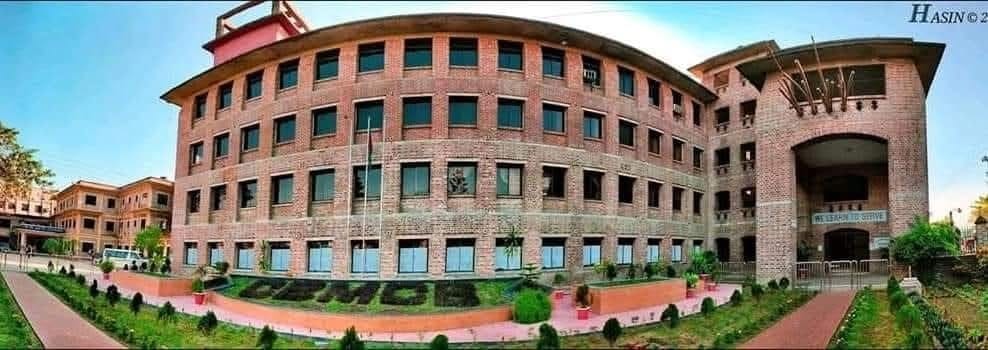
Community Based
Medical College, Mymensingh
Also known as: CBMCB | Run by Community Health Foundation BangladeshWritten by Osama, MBBS student, Marks Medical College, Dhaka. This one is different from most of what I write, this is based on my own experience as a current Indian student here, not just research from outside.
About Community Based Medical College
Community Based Medical College, known as CBMCB, was set up in 1995 in Winnerpar, Mymensingh, run by the Community Health Foundation Bangladesh, a foundation started a year earlier in 1994 by thirty people from different professions who wanted to build something focused on community healthcare rather than pure commercial medicine. It’s affiliated with the University of Dhaka, spans a genuinely large 22-acre campus, and runs the standard 5-year MBBS course followed by the mandatory 1-year internship.
🛡️ Recognition & Accreditation
- ✔ BM&DC — Bangladesh Medical & Dental Council
- ✔ University of Dhaka Affiliated
- ✔ NMC — National Medical Commission, India
- ✔ WHO — World Health Organization
- ✔ FAIMER / WDOMS Listed
How to reach Community Based Medical College from India
You’ll land at Hazrat Shahjalal International Airport in Dhaka, same as every other college on this site. From there, it’s a straight 98 kilometres down the Dhaka-Mymensingh highway, and the drive genuinely takes around 3 hours because of traffic on that road. It’s not a short hop like some of the colleges right in Dhaka city, so plan for that on arrival day.
Walking through the main gate the first time genuinely surprised me with the scale of it. This isn’t a compact city campus, it’s a sprawling 22-acre space that feels more like a self-contained township than a college, there are internal lakes, plant nurseries, and concrete walking paths wrapped around the academic and hostel buildings. The environment is peaceful, non-political, and there’s a genuine zero-tolerance approach to ragging here, senior Indian students were welcoming from day one, no intimidation at all.
The Official Fee Structure of Community Based Medical College— Session 2026-2027
| # | What It’s For | Amount (USD) |
|---|---|---|
| 1 | Admission Fee (Development Fee) | $20,500 |
| 2 | Tuition — first 18 months, $210/month | $3,780 |
| Tuition — remaining 42 months, $250/month | $10,500 | |
| 3 | Hostel Establishment Fee | $800 |
| 4 | Session Fee (three sessions) | $1,800 |
| 5 | Other Incidental Fees Marks verification, BMDC registration, Dhaka University affiliation, local exam fee, clinical & field training, library | $3,620 |
| TOTAL PAYABLE | $41,000 |
Math check: $20,500 + $3,780 + $10,500 + $800 + $1,800 + $3,620 = $41,000. Matches exactly to the official letter.
Payment Schedule
What’s NOT Included in Community Based Medical College , and the Reservation Rule
Food: paid separately to the student mess, not part of the $41,000.
Govt. fee: $1,000 plus Dhaka University Registration Fee $1,000, paid separately at admission.
Late payment fine: $2 per day for anyone late on their dues.
Study tour: if arranged, subscribed separately by each student.
The seat reservation deposit is strict. To reserve a seat, you send a TT worth $5,000 in favour of the college, and the letter is direct about this: if that $5,000 doesn’t reach CBMCB’s account by the stated date, your reservation is automatically cancelled. Once received, you then pay the remaining $8,500 plus $2,000 in govt./university fees during final admission, and submit all original documents including a medical fitness certificate, failing which your initial deposit is forfeited and your selection cancelled.
Bank Details
🏦 Official Bank Account
- 🏛️ Account Name: Community Based Medical College Bangladesh
- 🔢 Account No: 0200002881448
- 🏦 Agrani Bank Ltd., Mymensingh Medical College Branch
- 🌐 Swift Code: AGBKBDDH001
- ✉ [email protected] | [email protected]
Hostel and Classes experience of Community Based Medical College
My Own Experience Here
Written from actually experiencing it live.
The Hostel
International students get placed in dedicated multi-storied hostels right behind the academic blocks, boys and girls strictly separated into different buildings. You can go double or triple sharing, and rooms come properly furnished, individual beds, study tables, chairs, wardrobes with multiple doors. A lot of the balconies face the campus lakes, which is genuinely nice after a long day of classes. AC or non-AC is your choice depending on budget. Power backup runs 24/7, so grid load-shedding doesn’t actually interrupt your study time, and Wi-Fi reaches through the residential corridors. There’s a warden on duty around the clock, CCTV covering the whole perimeter, and entry points are properly monitored. Common rooms have shared laundry and TVs.
The Food
This was one of my biggest worries before coming, and it turned out fine. The hostel runs a student-managed mess that cooks Indian food specifically. Bangladesh’s regional diet leans rice and fish heavy, which already suits students from West Bengal or Tripura, but even for batchmates from North or South India, the mess cooks use familiar spices for maida rotis, daal, seasonal sabzis, and chicken. The college doesn’t bill you for this, it’s managed separately by the student committee, and runs roughly $30 to $50 a month paid directly to the mess manager.
The Academics and the Language
Classes are taught entirely in English, and the professors are genuinely accessible, if you’re stuck on something, you can walk up after lecture hours and they’ll sit with you until it clicks. But here’s the honest part nobody tells you before you arrive. The moment you step into the hospital wards for clinical rotations, your English textbooks stop helping you talk to actual patients. The people coming through this hospital are mostly rural and suburban locals who speak regional Bengali, not English. Learning spoken Bengali becomes genuinely mandatory just to take a patient history or get through your bedside clinical vivas. If you’re coming from a non-Bengali-speaking state, expect the first 3 to 6 months to be a real shock, but local teachers and senior batchmates actively help you pick up the dialect, you’re not left to figure it out alone.
Attendance is taken seriously here. If it drops below 75% across lectures, practicals, or ward duties, you’re barred from sitting the professional board exams, no exceptions made. And the passing mark for every exam is 60%, higher than the 50% most of us were used to from India.
The Hospital and Clinical Exposure at Community Based Medical College
This is honestly the biggest reason I’d pick this college over some other options. The 650-bed teaching hospital sits right on campus, right on the highway, and it’s genuinely busy. Because it serves the wider community, not just a curated patient population, you see real tropical infectious diseases, serious maternal health complications, and a steady stream of highway trauma cases coming through. You’re not learning off a mannequin, you’re checking real vitals, taking real histories, watching real surgeries from early on. It’s exhausting some days, but it’s exactly the kind of exposure that actually prepares you for practicing medicine, not just passing a written exam.
I’ll be honest, the language shock in the wards is real, and I don’t think enough people warn students about it before they arrive. If you’re coming from a state where Bengali isn’t spoken at all, be ready for a genuinely tough first few months in clinical postings. Nobody hands you that skill, you have to build it fast, with help from teachers and seniors who do actually step up.And its easy to learn and we learnt it in first year itself by talking to our batchmates and locals who knew both Hindi and Bengali.
But everything around that challenge is genuinely strong. The 22-acre campus feels peaceful and safe in a way that matters a lot when you’re this far from home for the first time. The hostel setup, the mess food, the security, all of it is properly organised, not an afterthought. And the 650-bed hospital gives you clinical exposure that’s hard to match, real patients, real volume, real pathology, not a curated teaching-hospital experience.
If you’re genuinely willing to put in the work to pick up spoken Bengali fast, this is a college I’d recommend without much hesitation. Come to us directly if you’re considering it, I can walk you through exactly what to expect based on actually living it,Most Consultants never even visit once.
Frequently Asked Questions
What is the total fee for Community Based Medical College?
Do I need to know Bengali to study here?
Is Indian food available at CBMCB?
How far is CBMCB from Dhaka airport?
Thinking About Community Based Medical College?
I actually live this, not just researched it. Contact us directly and I’ll give you an honest picture based on real experience, no agent markup.
💬 WhatsApp Osama