

By Osama Halari · Final Year MBBS, Marks Medical College, Dhaka · SamadVlogsMBBS
I’ll be honest with you, when parents of girl students ask me about the safest, most affordable MBBS college in Bangladesh, one name comes up every single time: Ad din Sakina Women’s Medical College, Jashore.
Sending your daughter across international borders for five years to study medicine is one of the most stressful decisions a parent can make. You worry about hostel safety, the local culture, the quality of food, and most importantly, the hidden financial costs that shady educational agents trap you with once you cross the border.
I personally visited the campus, spoke to the students living in the hostels, and reviewed the official fee circular for the upcoming 2026-27 session. This post is not a promotional brochure filled with fake promises. It’s a real, and honest, and complete picture, highlighting the massive advantages, the extremely strict rules, the exact official fees down to the last dollar, who this college is absolutely perfect for, and who might find it too restrictive.
If you’re an Indian female student (or a parent researching MBBS abroad options), read this fully before making any decision or paying a single rupee to an agent.
⚠️ Quick Warning First: Dozens of fake agents are circulating outdated fee figures and wrong information about this college online. Everything in this post is sourced directly from the official Ad-din Foundation fee circular, dated 05 May 2026 (Memo No. AF/Foreign student/2026-27/511). No guesswork. No hidden agendas.
Ad-din Sakina Women’s Medical College , At a Glance
Before we dive into the deep details, here is a quick snapshot of the institution to help you understand its standing among Bangladesh medical colleges.
| Detail | Information |
|---|---|
| Full Name | Ad-din Sakina Women’s Medical College (ASWMC) |
| Founded by | Ad-din Foundation (a major healthcare NGO in Bangladesh) |
| Location | Jashore (Jessore), Bangladesh |
| Established | 2012 |
| Affiliation | Rajshahi Medical University (RMU) |
| Recognition | BM&DC ✓ NMC (India) ✓ WHO ✓ |
| Student Type | Women Only (100% female campus) |
| MBBS Seats / Year | 75 |
| Hospital | 500-Bed Hospital (part of Ad-din Jashore complex) |
| Total MBBS Fee (5 years) | $33,500 USD (~₹31,15,000) |
| FMGE Pass Rate | ~70% (significantly above national foreign MBBS average) |
| Hostel Included? | No – paid separately (~$120-$150/month) |
Want to verify your eligibility for this college? Send your marksheets to us on WhatsApp — free eligibility check.
The Location Advantage Nobody Talks About: Jashore (Jessore)
Most Indian students and parents immediately think of Dhaka when considering MBBS in Bangladesh. That’s understandable — Dhaka has the highest concentration of medical colleges. But Jashore is, in my professional opinion, the single most strategic location in Bangladesh for Indian students — especially those from West Bengal, Odisha, Bihar, Jharkhand, and the Northeastern states.
Here’s why the location is a big deal:
No Flights Required, You can Cross by Road from India
Jashore sits right next to the Petrapole–Benapole international border crossing , one of the busiest, safest, and most developed India-Bangladesh land borders, directly connecting West Bengal to Bangladesh.
Let me explain the travel logistics. If you live in West Bengal or neighboring states, you don’t even need to look at flight tickets. The journey from Kolkata is incredibly simple:
- Take a local train or the comfortable AC Royal Cruiser bus from Kolkata to Bongaon/Petrapole.
- Walk across the organized Petrapole border immigration terminal.
- Enter Benapole (Bangladesh) and take a short, 45-minute drive directly to the Jashore campus.
- Total travel time: ~4-6 hours from central Kolkata directly to your hostel bed.
- Cost: ₹500–1,000 one way (vs ₹8,000–15,000 for Dhaka flights).
This means students can visit home on long weekends or during short Eid/Puja holidays. Parents can visit without the massive expense of booking international flights. And most importantly, in any medical or family emergency, getting back to India is fast, affordable, and stress-free.
For students from West Bengal, Odisha, Assam, Bihar, Jharkhand, and Sikkim and anywhere from India, this is a massive practical advantage that literally saves the family lakhs of rupees in travel expenses over the five-year MBBS duration.
The City of Jashore: Peaceful life
Jashore is a calm, well-developed, mid-sized city in the southwestern part of Bangladesh. It’s not as busy, polluted, or overwhelming as the capital city of Dhaka. The culture, food habits, and climate are almost identical to West Bengal, India. Bengali is the primary language, and if you speak Bengali or Hindi, you’ll settle in within weeks, not months. The local community is highly welcoming to Indian students, making the transition seamless.
The Campus and Hospital: What I Saw When I Visited
Ad-din Sakina Women’s Medical College is part of the Ad-din Foundation, one of Bangladesh’s most reputed and highly funded healthcare NGOs. The Ad-din Foundation runs multiple hospitals, medical colleges, and nursing institutes across the country (including branches in Dhaka and Khulna). This is not a fly-by-night institution built just to extract foreign tuition fees — it’s a massive healthcare network that has been operating since 1981.
The 500-Bed Hospital.
The teaching hospital attached to ASWMC is a full 500-bed facility, which is on the larger end for private medical colleges in Bangladesh. Because the Ad-din Foundation is historically focused on maternal and child healthcare, their hospitals are naturally flooded with relevant clinical cases.
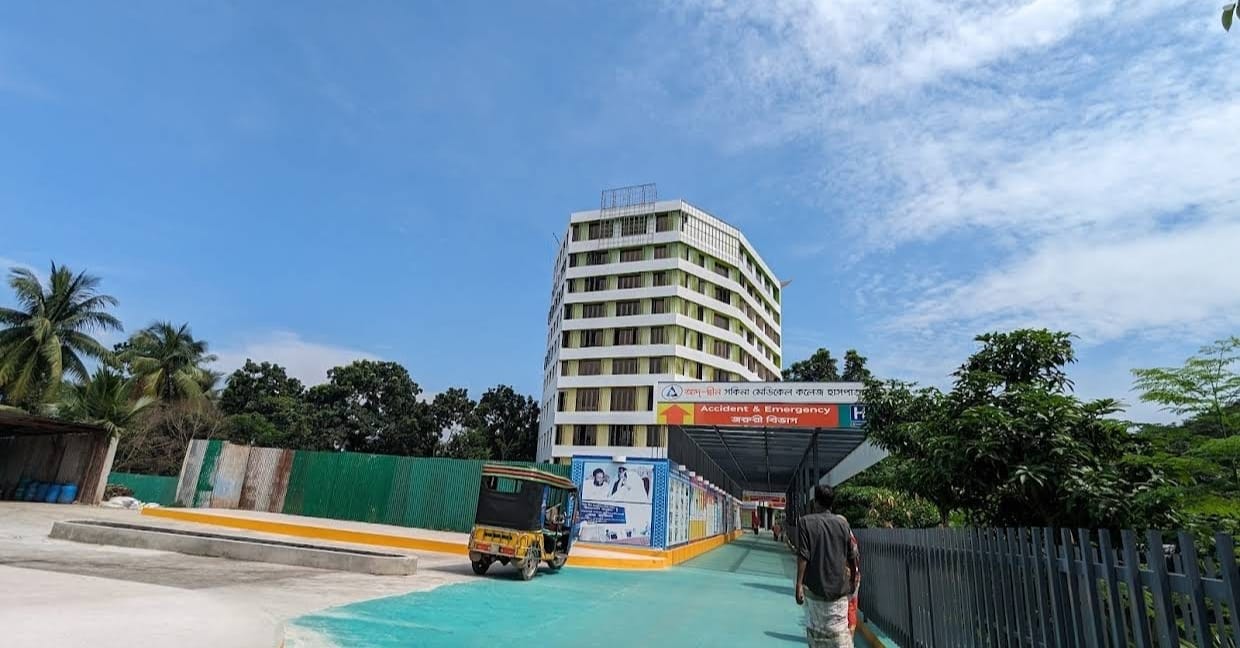
What I found particularly impressive during my visit:
- 170 dedicated Maternal/Obstetric beds — For a female medical student, mastering Obstetrics and Gynecology (OB-GYN) is often a top priority. The exposure here is exceptional.
- 100 NICU (Neonatal Intensive Care Unit) beds — This provides massive clinical exposure in Neonatal Medicine and Pediatrics, allowing students to observe and assist in critical care scenarios.
- High patient OPD volume — Jashore district is densely populated and Ad din is known for affordable care, so the hospital sees a massive volume of real, diverse patients daily.
- Strong pathology, surgery, and internal medicine wards ensuring a well-rounded medical education.
As an MBBS student myself, I know exactly how critical clinical exposure is. You cannot become a good doctor just by reading textbooks. Bangladesh is already leaps and bounds ahead of Russia, Ukraine, and China on this front due to the high patient-to-student ratio, and ASWMC’s hospital gives genuinely hands-on clinical training volume, rather than just forcing students to stand in the back row and observe.
Campus Infrastructure and Ultimate Security
The campus is beautifully self-contained: modern classrooms, advanced anatomy dissection labs, a well-stocked library, a clean canteen, and the hostel blocks are all within the same secured compound. And believe me this is one of the best campuses among private colleges in Bangladesh.
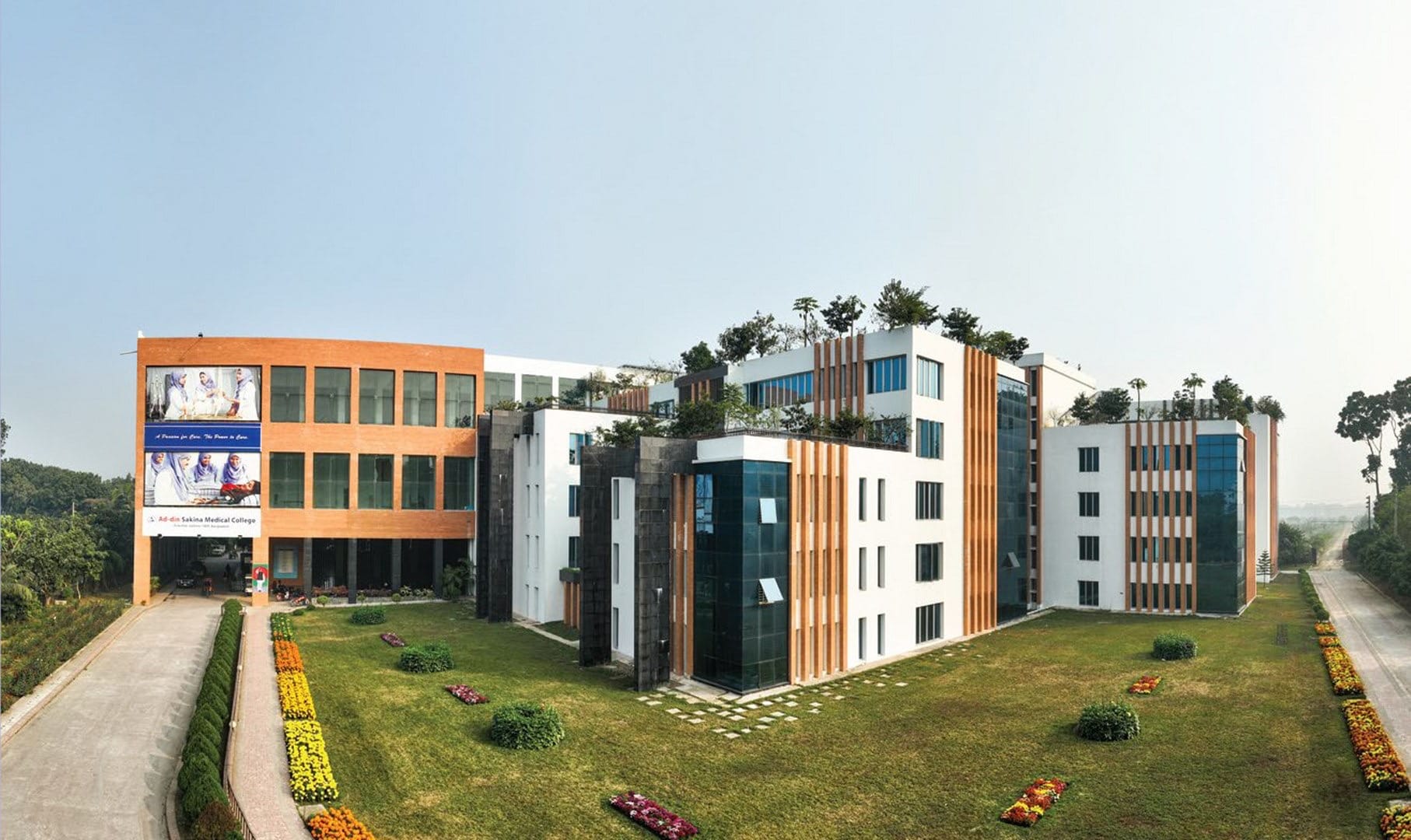
The entire campus is women-only. No male visitors (not even male relatives, without extreme prior permission and screening through proper channels) are allowed inside the hostel premises. For parents who are highly concerned about safety, this is as secure as it gets anywhere in the world.
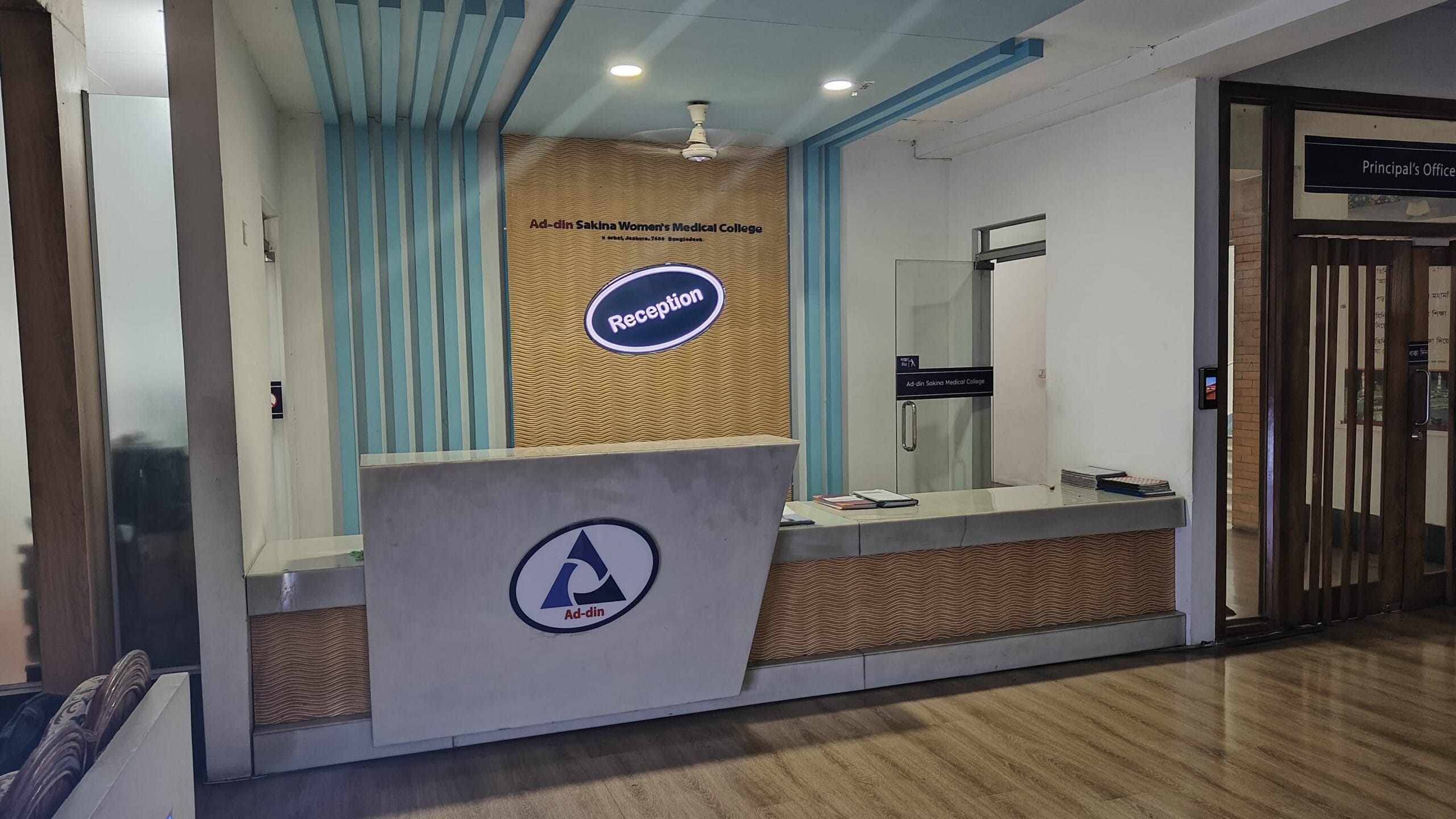
💰 Official Fee Structure 2026-2027 Every Rupee Explained
This is probably what you came here for. I’m sharing the exact figures from the official Ad-din Foundation fee circular (Memo No. AF/Foreign student/2026-27/511, dated 05 May 2026). Not from a generic Google PDF from 2022. Not from a greedy agent’s WhatsApp forward. The actual, current official document.
Let’s do a quick reality check. In India, a private medical seat will cost you anywhere between ₹80 Lakhs to ₹1.2 Crores. Here, you are getting an NMC-approved, English-medium MBBS degree for a fraction of that cost, with zero hidden “donations” or “capitation fees”.
Total MBBS Course Fee
| Fee Component | Amount (USD) | Amount (INR Approx) |
|---|---|---|
| Total 5-Year Course Fee (Tuition + Admission + Session) | $33,500 | ~₹31,15,000 |
| Internship Fee (paid at admission, refunded as monthly stipend) | $2,000 | ~₹1,86,000 |
| Hostel Security Deposit (non-refundable) | $120 | ~₹11,160 |
📌 Important Detail on the Internship Fee: The internship fee of $2,000 is NOT a loss. Many agents cause panic over this. As per the official circular, this amount is paid at the time of admission and is returned to you in equal monthly installments as an honorarium/stipend during your mandatory 1-year internship period. Think of it as a forced savings deposit that ensures you get paid during your internship.
Payment Schedule — How and When You Pay
| Stage | Amount (USD) | Notes |
|---|---|---|
| Booking Amount (Non-Refundable) | $5,500 | Paid before admission to reserve seat |
| At Time of Admission | $8,000 | Non-refundable. Paid when you join |
| 1st Installment | $5,000 | 15 January 2028 |
| 2nd Installment | $5,000 | 15 January 2029 |
| 3rd Installment | $5,000 | 15 January 2030 |
| 4th Installment | $5,000 | 15 January 2031 |
| Total | $33,500 | Spread over 5 years |
The payment structure is exceptionally parent-friendly. You don’t pay everything upfront. The heaviest initial payment ($8,000) is at admission, and after that, the remaining $20,000 is split cleanly into 4 equal yearly installments over the next 4 years. This greatly reduces the immediate financial burden.
Hostel Fees (Separate, Monthly)
Unlike some colleges that force you to pay 5 years of hostel fees in advance, Ad-din Sakina allows you to pay monthly, giving you flexibility.
| Room Type | Monthly Cost | Notes |
|---|---|---|
| Premium / AC Room | $150/month | Best comfort (electricity metered separately) |
| AC Double/4-bed Room | $140/month | Shared AC room |
| Non-AC Room | $120/month | Budget option |
| Utility Bill (Non-AC rooms) | $20/month extra | Electricity, water, service charge |
| Food (Approximate) | ~$30-40/month | Hostel mess food (Indian dietary options usually available) |
So realistically, your monthly living cost will be approximately $150–180/month including room and food — which is roughly ₹14,000–17,000/month. That’s extremely affordable for a medical student living in a safe, gated campus. Cost of living in Jashore is noticeably cheaper than the capital city of Dhaka.
Additional Costs to Budget For
- University Registration & BM&DC fees: As per government rate (we can estimate this for you, usually around $1,500 – $2,000 paid directly to the university).
- Personal expenses (toiletries, transport, sim card, stationery): ~$30–50/month
- Books: ~$100–150 total for 5 years (photocopies and senior hand-me-downs are widely available)
- Travel (India visits): ~$30–60 per trip via land border (significantly cheaper than flying!)
Total 5-Year Cost Estimate (The Grand Total)
| Cost Component | Total 5 Years (USD) | Total 5 Years (INR approx) |
|---|---|---|
| Tuition (course fee) | $33,500 | ₹31,15,000 |
| Hostel + Food (60 months @ ~$170 for premium Ac rooms) | ~$10,200 | ~₹9,50,000 |
| Personal expenses (60 months @ ~$50) | ~$3,000 | ~₹2,79,000 |
| Travel, books, misc | ~$1,500 | ~₹1,40,000 |
| TOTAL ESTIMATED BUDGET | ~$48,200 | ~₹45–47 Lakhs |
⚠️ Critical rule from the official circular: “Only students and parents are permitted to make payments through the bank directly. Payments from other individuals or agents are NOT allowed.” This means no agent should ever handle your money unless you get proper receipt. Pay only directly to the college via Telegraphic Transfer (TT) from your Indian bank account.
📚 Academic Curriculum: Is It Similar to India?
Yes, Bangladesh’s MBBS curriculum follows the updated 2021 Bangladesh Medical & Dental Council (BM&DC) framework, which is very closely aligned to India’s NMC curriculum. This is the single biggest reason why Bangladesh students have one of the highest FMGE/NExT pass rates among foreign MBBS graduates.
If you walk into the ASWMC library, you will see the exact same textbooks being used in AIIMS Delhi or KEM Mumbai. You will read B.D. Chaurasia for Anatomy, Guyton & Hall for Physiology, and Robbins for Pathology. This creates a massive academic advantage when you return to India.
At ASWMC, the program is rigorously divided into 4 phases:
| Phase | Duration | Subjects |
|---|---|---|
| Phase I | 1.5 Years | Anatomy, Physiology, Biochemistry |
| Phase II | 1 Year | Pharmacology, Forensic Medicine |
| Phase III | 1 Year | Community Medicine, Microbiology, Pathology |
| Phase IV | 1.5 Years | Medicine, Surgery, OB-GYN |
| Internship | 1 Year | Rotating clinical postings across all major departments |
The theory medium of instruction is 100% English. Explanation by teachers to local students and Clinical communication with patients in the wards is in Bengali — which most students pick up naturally within a few months. Given that Jashore is essentially on the West Bengal border, Bengali-speaking students will find the patient interaction especially effortless.
The Strict Rules and I’m Not Going to Hide This
I always tell students and parents the full, unfiltered truth. ASWMC is a highly disciplined, strictly regulated campus. If you’re looking for a relaxed college life, late-night cafe visits, and complete social freedom, this is not the place for you. But if you or your parents prioritize ultimate security, deep academic structure, and a 100% distraction-free environment — this is exactly what you want.
Here are the official rules directly from the college circular (Clause 8):
- No mobile phones allowed inside the college building or hospital premises at any time. (You can use them in the hostel).
- Mandatory morning assembly at 7:45 AM — attendance is compulsory for all students, establishing a disciplined daily routine.
- Strict 6:00 PM hostel curfew — all hostellers must be inside the gates by 6 PM.
- Dress code/Uniform is strictly enforced at all times (professional medical attire).
- College and hospital timings must be followed meticulously.
- Any violation of discipline is subject to formal disciplinary action.
I know some modern students reading this might be instantly put off. I have spoken to many juniors at ASWMC. Initially, the ‘no smartphone in class’ rule feels like a shock. But within a month, they realize how much time it saves. Without the distraction of Instagram notifications during lectures, their academic focus increases which directly translates to the college’s high FMGE passing rate.
From a parent’s perspective , especially parents sending their young daughters alone to Bangladesh for the first time, these rules act as a “security bubble”. It is a feature, not a bug. The campus becomes an extremely safe, structured environment. Every girl is accounted for. There are no incidents of harassment, ragging, or security issues that I’ve ever heard of. The college management takes student welfare with the utmost seriousness.
My honest advice: If you’re self-disciplined and hyper-focused on your medical studies, you’ll do very good here. If you were hoping for a lot of freedom and a vibrant, outgoing social life, then look at co-ed colleges in the center of Dhaka instead.
✅ Honest Pros & ❌ Honest Cons
To summarize everything, here is a balanced look at the reality of studying at Ad-din Sakina.
✅ Advantages
- One of the cheapest quality MBBS options in Bangladesh — $33,500 total course fee is below the current average for private medical colleges.
- 100% women-only campus — maximum safety, comfort, and security for female students.
- Ad-din Foundation backing — one of Bangladesh’s most reputed NGO healthcare networks, ensuring long-term institutional stability.
- NMC + BM&DC + WHO recognized — degree is fully valid for the FMGE/NExT licensing exams in India.
- 70% FMGE pass rate — among the best for any foreign MBBS destination globally.
- 500-bed hospital with 170 maternal beds + 100 NICU beds — exceptional clinical exposure, especially for OB-GYN and Pediatrics, turning you into a highly competent clinical doctor.
- Border location — Petrapole-Benapole crossing means easy, cheap, flight-free trips home for Eastern Indian students.
- Direct bank payment only — no agent can siphon your money; the transparent system protects students.
- Installment-friendly — only $8,000 at admission; the rest is spread over 4 years.
- Cultural familiarity — Jashore shares food, culture, and climate with West Bengal, preventing culture shock.
❌ Considerations / Drawbacks
- No mobile phones on campus — strict rule; parents will not be able to call during class or hospital hours.
- 6 PM curfew — very early by most young adults’ standards; limits evening social life entirely to the hostel bounds.
- Smaller city — Jashore is not Dhaka; there are fewer shopping malls, high-end cafes, or entertainment options.
- Hostel not included in base fee — you must budget separately (~$120-150/month) for accommodation and food.
- 75 seats only — extremely high demand; foreign quota seats fill up quickly every session.
Who Is This College Perfect For?
Based on my extensive research and conversations with current Indian students, Ad-din Sakina Women’s Medical College is the absolute ideal choice for:
- ✅ Female students from West Bengal, Odisha, Assam, Bihar, Jharkhand, and Even other parts of India who want to minimize travel cost and time via the land border.
- ✅ Parents who prioritize maximum security and want to send their daughter to a controlled, highly-supervised, women-only environment.
- ✅ Budget conscious families — this is one of the most affordable NMC-recognized options available that still delivers high-quality education.
- ✅ Students who are self-disciplined and prefer a strict, academic structure over a relaxed campus lifestyle.
- ✅ Students who want to maximize their FMGE chances — the high pass rate and India-similar syllabus make this a brilliant strategic choice.
- ✅ Student who want a complete Campus.
This college may NOT be ideal for:
- ❌ Students who want a co-ed campus life and modern social freedom.
- ❌ Students from Western/Northern India who don’t want to deal with the multi-leg journey (Flight to Kolkata -> Road to Border -> Campus).
- ❌ Students who are heavily reliant on constant smartphone access throughout the day.
Our Honest Verdict: Should You Choose Ad din Sakina?
After reviewing the official 2026-2027 circulars and speaking directly with students who study there , yes, for the right student profile, Ad-din Sakina is one of the absolute strongest choices in Bangladesh.
Here is the core logic: You are getting an NMC-recognized, BM&DC-approved MBBS degree from a legitimate foundation-run institution, With A beautiful campus , backed by a massive 500-bed hospital, boasting a ~70% FMGE pass rate, all at a total course fee of $33,500. That combination of price, safety, and clinical quality is incredibly hard to beat anywhere in the world right now.
The strict rules are a real consideration that you must accept before joining. But remember, the rules exist precisely because this is a dedicated women’s campus, and the management takes safety seriously. In all my years operating here, I have never heard a single safety complaint or ragging incident from students at ASWMC. That track record speaks for itself.
Furthermore, the border advantage for East Indian families is a genuine, practical, money-saving feature that no other major college situated deep inside Dhaka can offer.
Bottom line: If you are a dedicated, disciplined female student, especially from Eastern India—or a parent looking for the safest possible, budget-friendly option to make your daughter a doctor, Ad-din Sakina is a resounding, highly recommended yes.
🎓 Want to Secure a Seat at Ad-din Sakina?
We help Indian students secure direct admission through the official DGME process — no shady agents, no hidden fees, no commission. I will personally guide you through every single step. Eligibility check, document verification, payment guidance — all completely free.
WhatsApp Osama – Free Guidance
✅ Free Eligibility Check | ✅ Get Official Fee PDF | ✅ Direct College Connect | ✅ Zero Agent Commission
Frequently Asked Questions — Ad-din Sakina Women’s Medical College
Is Ad-din Sakina Women’s Medical College NMC-approved?
Yes. ASWMC is fully recognized by the National Medical Commission (NMC) of India, BM&DC (Bangladesh Medical & Dental Council), and is listed in the WHO World Directory of Medical Schools. This means Indian students can return to India, appear for the FMGE/NExT screening test, and practice legally after completing their MBBS here.
What is the total fee for MBBS at Ad-din Sakina in 2026-27?
As per the official circular, the total 5-year MBBS course fee is $33,500 USD (approximately ₹31,15,000). This base package includes admission, tuition, and session fees. Accommodation (hostel) and food are separate, costing approximately $120–$150 per month depending on whether you choose an AC or non-AC room.
Is Indian food available in the hostel mess?
Yes. Because the college hosts a large number of Indian students (especially from Eastern India), the hostel mess provides familiar dietary options, including regular vegetarian meals, Dal, Roti, and standard Bengali cuisine which is identical to West Bengal’s daily diet.
Is NEET required for admission at Ad-din Sakina Women’s Medical College?
For the college’s own admission criteria, NEET is not explicitly mandatory. However, Indian students who wish to practice medicine back in India MUST have a valid “NEET Qualified” scorecard to be eligible to appear for the FMGE/NExT licensing exam in India after completing their degree. Therefore, we highly advise securing a passing NEET score.
Can male students apply to Ad-din Sakina Women’s Medical College?
No. ASWMC is a 100% women-only institution. Only female students are admitted to ensure a completely secure, dedicated environment.
What is the FMGE pass rate for Ad-din Sakina students?
The historically reported FMGE pass rate for ASWMC students is approximately 70%. This is incredibly high and significantly above the national average for foreign MBBS graduates (which historically hovers around a dismal 15-25% for graduates returning from countries like Russia, China, and Kyrgyzstan). The identical curriculum is the reason for this success.
Is there a 6 PM curfew for hostel students?
Yes. As per the official college regulations outlined in their admission agreement, a strict 6:00 PM curfew is enforced for all hostel residents. Additionally, mobile phones are strictly prohibited inside the academic building and hospital premises during working hours.
How do I travel from India to Ad-din Sakina Women’s Medical College?
The most convenient, flight-free route from Eastern India is by road/train. You travel to Bongaon (West Bengal), cross the Petrapole international border on foot, enter Benapole (Bangladesh), and take a short local drive to Jashore (approximately 15-20 km from the border). The total journey from central Kolkata is approximately 4-6 hours, making it incredibly cheap and accessible.
How many MBBS seats are available per year at ASWMC?
There are roughly 75 seats available per academic year. Given the massive demand from Indian female students due to the border proximity and high safety standards, the foreign quota seats fill up extremely quickly. We recommend contacting us as early as possible to start the DGME verification process.
Can I pay the fees in installments?
Yes, the structure is very friendly. The payment is broken down as follows: a $5,500 non-refundable booking amount, $8,000 at the time of final admission, and the remaining $20,000 paid in four equal yearly installments of $5,000 each over the next 4 years (Due every January).
Are agents allowed to pay fees on my behalf?
Absolutely not. The official college circular explicitly warns: “Only students and parents are permitted to make payments through the bank directly. Payments from other individuals or agents are NOT allowed.” All payments must be made via direct Telegraphic Transfer (TT) by the student or parent straight to the college’s official bank account.
📞 Ready to Apply? Here’s What to Do Next
If Ad-din Sakina sounds right for your future, here is your immediate next step to secure a seat safely:
- Send your Class 10 & 12 marksheets + NEET scorecard to me on WhatsApp.
- I will personally check your eligibility using the complex official DGME GPA formula — 100% for free, within 15 minutes.
- If you are eligible, I will guide you and your parents through the entire process: DGME application, Ministry document verification, TT payments, student visa, and your arrival in Jashore — at zero charge to you.
I am Osama Halari, a final year MBBS student at Marks Medical College, Dhaka. I’ve personally reviewed this college, I know the exact DGME process, I have helped dozens of Indian students safely enroll in Bangladesh colleges, and I earn zero commission from any institution. My only job is to provide honest senior guidance and make sure you don’t get cheated by fake agents.
💬 Click here to start the conversation on WhatsApp — it’s free and I reply personally.
You can also subscribe to Samad Vlogs MBBS on YouTube where my partner Samad shows real campus life, hostel conditions, mess food, and clinical lectures so you can see exactly what your next 5 years will look like before you ever book a ticket.
📄 Source Declaration: All fee figures, rules, and regulations cited in this post are sourced directly from the official Ad-din Foundation foreign students fee circular, Memo No. AF/Foreign student/2026-27/511, dated 05 May 2026, officially signed by Prof. Dr. Nahid Yasmin (Director General, Hospitals & Nursing, Ad-din Foundation) and Md. Siddiqur Rahman Sumon (Assistant Director, Medical Colleges).
Last Updated: May 2026 | Author: Osama Halari, Final Year MBBS, Marks Medical College, Dhaka, Bangladesh

